
Welcome to The People Behind the Programs, a blog series celebrating the voices, stories, and impact of the community professionals powering connection and belonging across the globe.
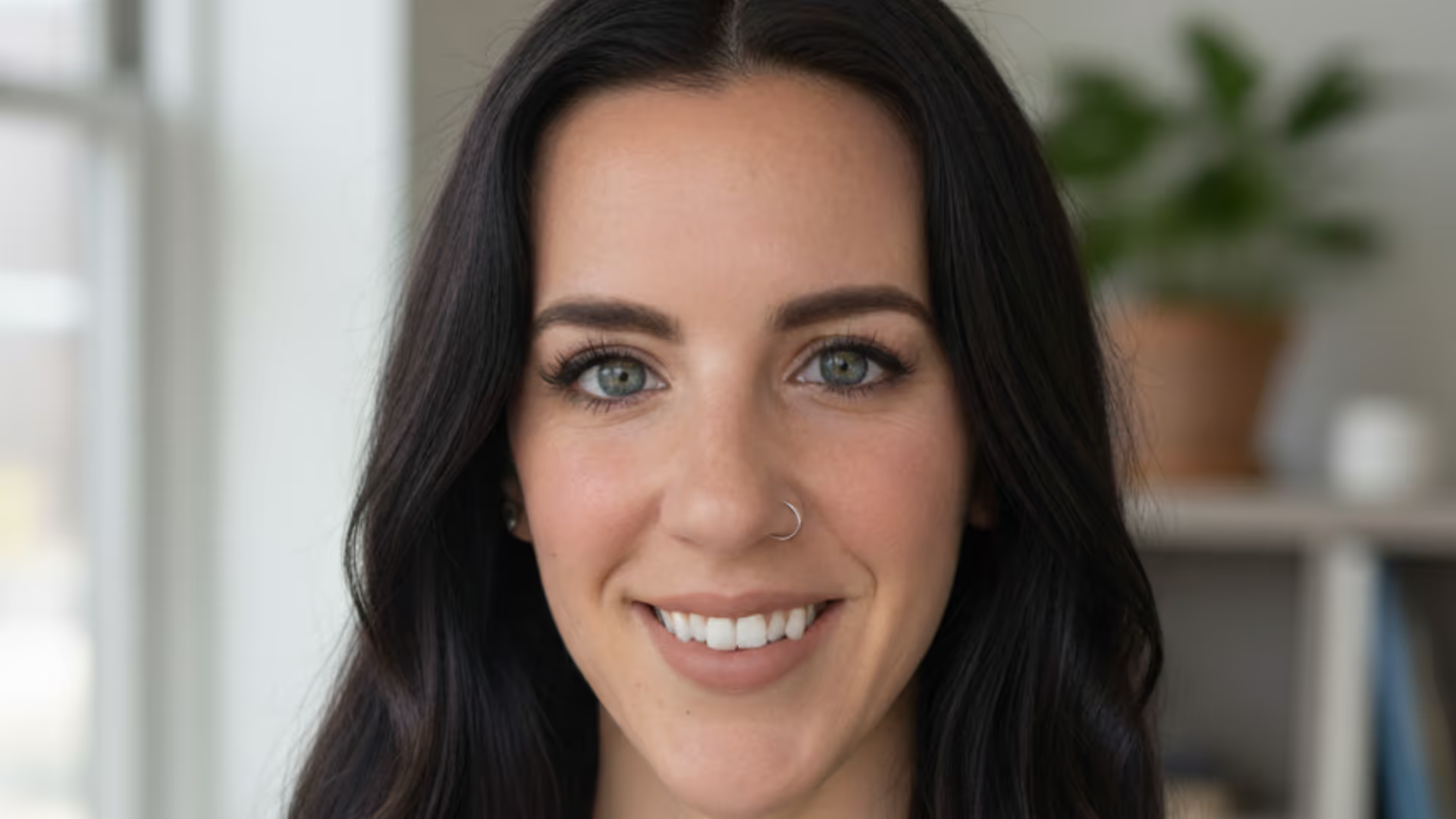
Today, we meet Kaila Lawrence, the Customer Advocacy Programs Lead at Klaviyo in Boston, MA. Kaila’s passion for storytelling led her to community management, where she found her true calling in bridging connections between brands and their audiences. Join us as we explore her journey and experiences in her own words.
How It Started
I started my career as a copywriter in B2C retail, but I felt disconnected from the people reading my work. That changed when I moved into the games industry and began running social channels, livestreams, and large-scale player communities. For the first time, I had a direct line to the audience. I realized I loved being the person who brings people together and gives them a place to be heard.
That experience pulled me into B2B tech, where I spent most of my career building community programs across startups and global enterprises. Each environment taught me the same thing. When you build with intention, community can transform the way a company learns from and serves its customers.
All of that led me to Klaviyo, where I shifted toward high-touch advocacy programs rather than at-scale community. I work closely with influential customers and partners, elevate their expertise, and bring their voices into the business in meaningful ways. Stepping into customer advocacy brought my whole career full circle by uniting my roots in storytelling with the connection and collaboration work I care about most.
A Day in the Life
I manage Klaviyo’s global Community Champions program, an annual application-based advocacy cohort made up of our most influential customers and partners. I spend my days building relationships, removing friction, and creating ways for our most passionate customers to shine.
My work blends strategy, coordination, and a whole lot of orchestration. I facilitate opportunities like monthly peer-led roundtables, product feedback sessions, alpha and beta testing, case studies, articles, webinars, and speaking opportunities. I plan our annual in-person summit focused on workshops, thought leadership, and product deep dives. I also maintain the systems that track our work and create enablement materials so Champions can easily share updates or new features with their own audiences.
A typical day starts with checking in on the Champions Slack community to engage with the group and make sure questions and feedback reach the right internal teams. I review new collaboration requests from across the business and match the right Champions to participate. Most of my time goes to partnering closely with GTM and R&D teams to plan product launches, campaigns, events, and major industry trade shows.
No two days look the same. It is a rhythm of constant collaboration, and that is what keeps the work fun and exciting.
The Tools that Power My Work
The tools I rely on most are the ones that make collaboration easy and keep a high-touch advocacy program running smoothly. Our broader customer community lives in Gainsight CC, but the core of the Champions experience happens in Slack. It gives us a real-time space for discussion, feedback, and quick connection into our internal workflows.
Behind the scenes, Monday helps me manage project requests, track Champion contributions, and run our recruitment workflow. The Google Suite is another pillar of my work. Shared Docs and Slides support co-creation across time zones, while Forms and Sheets make it simple to collect and analyze feedback. Zoom is essential for humanizing relationship-building across a global program.
AI tools have become one of the most transformative parts of my toolkit. I use combinations of ChatGPT, Glean, and Zapier to build agentic AI experiences that automate program questions, route project requests, match Champions to opportunities, generate content, and score applications. AI handles the operational lift, which gives me more time to focus on the human work that makes advocacy successful.
At the end of the day, I’ll use any tool that helps Champions shine and allows me to stay focused on supporting them.
Advice for Newcomers
After more than ten years in this field, I can boil the most important things I have learned down to three core lessons. If you understand these, you will build communities that last.
- Build for your members first.
New community builders often focus on business goals first and try to gather member feedback later. Sometimes those goals align with what members want, and sometimes they do not. A good community builder can recognize the difference. A great one can build for both. Member needs shape the purpose, and business priorities shape the structure around it. - Community is not a distribution channel.
Companies and new builders often treat community as another place to push content and then wonder why it falls flat. Social media and other marketing channels are built for one-to-many communication between a brand and an audience. Community is the opposite. It is a many-to-many environment where members create the content, drive the conversation, and shape the culture. If you design for broadcasting, that is all your community will ever be. If you design for meaningful connection, the community will grow into something greater than the sum of its parts. - The magic is in the unscalable work.
You can build systems that support growth, but you cannot automate relationships. There are no shortcuts to learning who your members are, expressing real gratitude, or helping them connect with each other. That slow, human work creates the foundation for long-term success. When you invest in those relationships, you build a space that stays warm and connected even as it grows.
Resources I Suggest
Here are a few books, frameworks, and practitioners that have shaped how I think about community and advocacy.
• The Business of Belonging by David Spinks
A strong foundation for community strategy. The SPACES Model is still one of the clearest ways to define community purpose.
• Superfans by Pat Flynn
A quick, memorable reminder that depth matters more than size. Small, passionate groups often create the most impact.
• Richard Millington (FeverBee)
Top-tier thinking on analytics and intentional community design. Great for leveling up your strategic skills.
• Brian Oblinger
Practical insights on operations, structure, and leadership for community pros growing into senior roles.
• Nikki Thibodeau and the Community Community
Nikki shares thoughtful content and leads the Community Community on Slack, a helpful space for more experienced community leaders.
• Community Manager Breakfast by Evan Hamilton
A weekly roundup of the best community content. Easy to scan and consistently valuable.
💬 If you’re also building community and customer advocacy, I’d love to connect on LinkedIn.
💡 The People Behind the Programs is a blog series that shines a light on the community professionals powering impactful programs around the world. Want to share your story or nominate someone doing incredible community work? Submit your spotlight here.
Are you passionate about building communities?
Join the movement, start a CMX Connect chapter in your city or virtually and become a local leader in the global community industry. 👉 Apply to become a chapter director


.svg)


.svg)

