
Welcome to The People Behind the Programs, a blog series celebrating the voices, stories, and impact of the community professionals powering connection and belonging across the globe.
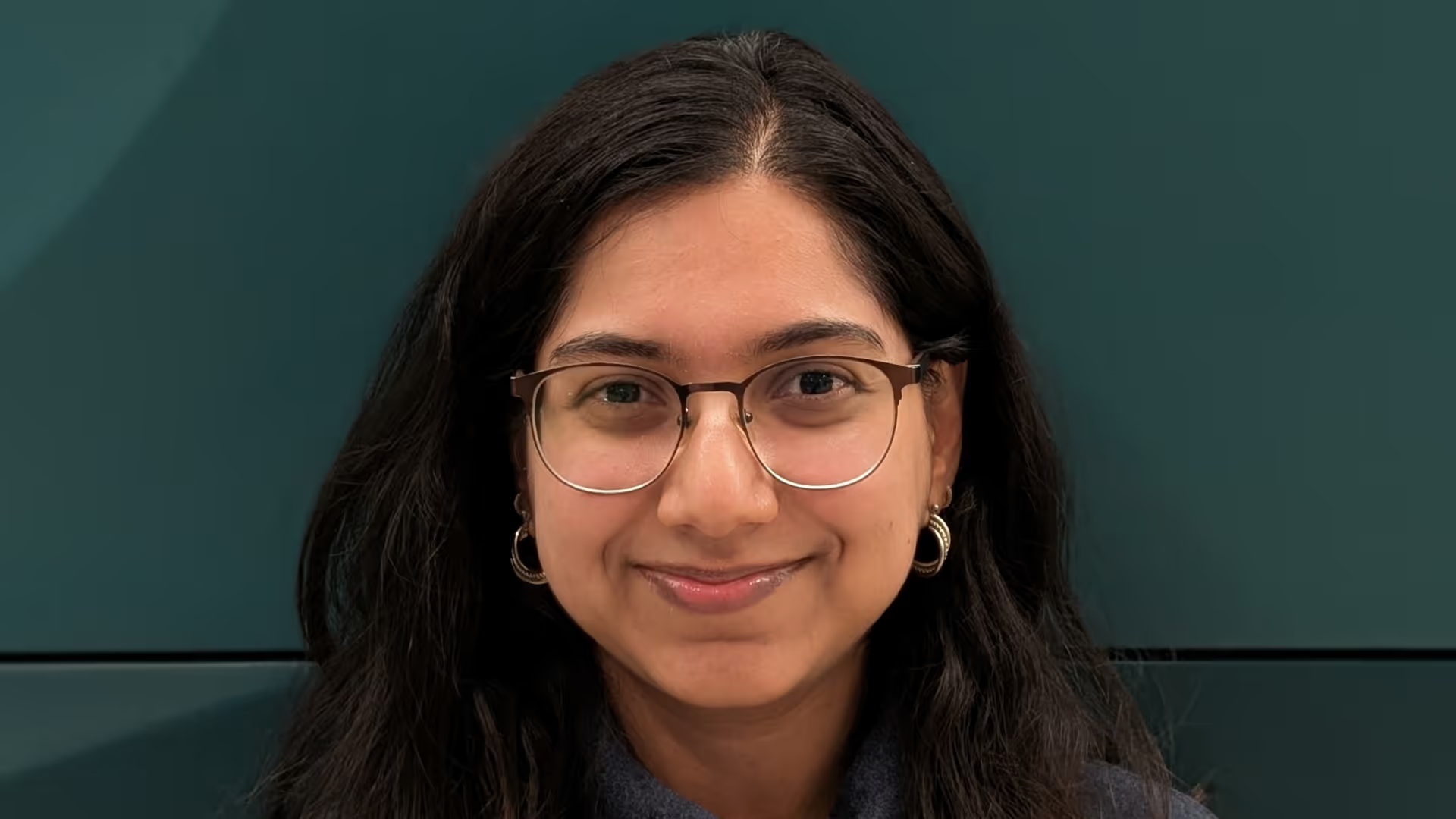
Today, we meet Bhargavi Mantha, the Community & Member Experience Manager at Women in Communication & Technology based out of Vancouver, Canada.
Bhargavi’s path to community development was unexpected, but has become a passionate pursuit intertwined with her every day. Let’s hear her story in her own words.
How It Started
During my MSc in Market Research & Consumer Behavior, I kept noticing something. I loved coursework, but what really energized me were the moments where people were at the center of everything. Leading the public speaking club, mentoring peers, solving problems on the fly, or creating experiences that brought people together — those were the moments where I felt most at home.
The funny part is I didn’t even know the community industry existed. A few days before graduation, with the pressure rising and no job lined up, I came across a posting for a role I had never heard of. I didn’t have the background they were looking for but something about it felt familiar, so I applied anyway.
They decided to take a chance on me. And within a few weeks, I knew I had landed exactly where I was meant to be. The work felt natural. It connected everything I enjoyed doing with the kind of impact I wanted to have.
Almost seven years later, that feeling has stayed with me. Community work found me when I wasn’t even looking for it, and it has been the right fit ever since.
A Day in the Life
I currently lead all things community at Women in Communications and hold the title of Community and Member Experience Manager. We’re a national non-profit focused on changing the way women experience work in Canada, and our community is at the heart of that mission.
A typical day rarely feels the same, but there’s a rhythm to it. I usually start by checking in on our members — reading feedback, noticing patterns, and understanding what people are asking for, even between the lines. From there, my day can unfold in a dozen different directions.
Some days are about curating programs and designing experiences that meet our members where they are. I might be mapping out a new group mentorship cycle, shaping an online workshop, or figuring out which topics will spark the most meaningful conversations. Other days, I’m deep in research or data, learning what’s resonating and where we need to adjust.
Events are a big part of the work too. I plan them, run them, and often host them, making sure each one feels intentional and accessible. There’s also the behind-the-scenes maintenance that keeps a community running — refining onboarding flows, updating documentation, or testing small improvements that make our spaces easier to navigate.
Collaboration threads through everything. I work closely with the rest of the team to align our programming with the broader mission and to make sure member experience stays consistent across every touchpoint. And at the end of most days, I’m pulling insights together into reports that help us understand what’s working and where to grow next.
It’s a mix of strategy, creativity, people work, and constant iteration — and it keeps the role dynamic in all the right ways.
The Tools that Power My Work
While my current community sits on Mighty Networks, if I had to share my go-to tools, they form a small ecosystem that helps me stay close to members while keeping everything running smoothly. I don’t rely on one single platform — instead, I combine a few that make the work feel more human and more manageable.
Slack is usually my starting point. It’s simple, familiar, and lowers the barrier for people to join conversations. I use it for quick interactions, informal check-ins, and creating spaces where members can speak in their own voice without feeling like they’re “posting” to an audience. It keeps the community warm and active even on quieter days.
For programming and shared learning, Notion has become my anchor. I use it to design resource hubs, organize mentorship content, map out journeys, and share everything from event calendars to reflection prompts. It helps me keep the community experience consistent and accessible, and members appreciate having a single place where information lives clearly.
Zoom also plays a bigger role than most people expect. Workshops, mentorship circles, and member-led sessions all happen there. It’s where people see each other, hear each other, and build trust in real time. Those face-to-face moments often spark the strongest connections.
And running beneath it all is Google Sheets. It may not be glamorous, but it keeps me grounded. I track engagement trends, event attendance, recurring questions, and member feedback there — and those patterns shape a lot of the decisions I make week to week.
None of these tools are complicated on their own, but together they create a community system that feels welcoming, organized, and easy to maintain. More importantly, they free up my time so I can focus on what matters most: listening to members, building meaningful experiences, and helping people feel like they belong.
Advice for Newcomers
If I could give advice to someone starting in the community industry, it would be to embrace the people work, even when it feels a little messy. Community building isn’t about perfect systems. It’s about understanding how people show up and creating spaces where they feel safe enough to engage.
When I first started, I thought I needed to have everything figured out. What I wish I knew earlier is that communities change quickly. The best thing you can do is listen closely, notice patterns, and be willing to adjust as you go.
Also, don’t underestimate small interactions. A simple check-in, a warm welcome, or a moment of recognition can shift someone’s entire experience. Those touches matter more than any tool or feature.
Be ready to experiment. Some ideas won’t land and that’s normal. Every misstep teaches you what your specific community actually needs.
And finally, give yourself grace. This work blends strategy, empathy, creativity, and operations, often all at once. It’s a lot, but it’s incredibly rewarding. If you stay curious and stay human, you’ll find your rhythm — and the work will feel meaningful.
Resources I Suggest
Two books that shaped how I approach community building are The Art of Gathering by Priya Parker and Our Iceberg Is Melting by John Kotter and Holger Rathgeber.
The Art of Gathering is full of stories and practical guidance on creating experiences that feel human, intentional, and meaningful. It’s a reminder that every interaction, online or in person, shapes how people connect and engage.
Our Iceberg Is Melting is a fable about a colony of penguins who discover their iceberg is melting. It’s a powerful metaphor for managing change, navigating resistance, and building urgency, lessons that are surprisingly relevant when helping communities adapt and grow.
For podcasts, I lean toward ones with transferable skills rather than just community tips. Getting Together by Mighty Networks shares stories from builders creating meaningful spaces. WorkLife with Adam Grant explores collaboration, human behavior, and motivation, all insights that translate directly into designing programs, engaging members, and fostering connection.
These books and podcasts don’t just give tips, they change the way I think about people, experiences, and the moments that make a community feel alive.
💬 Let’s connect on LinkedIn — I’d love to hear from fellow community builders.
💡 The People Behind the Programs is a blog series that shines a light on the community professionals powering impactful programs around the world. Want to share your story or nominate someone doing incredible community work? Submit your spotlight here.
Are you passionate about building communities?
Join the movement, start a CMX Connect chapter in your city or virtually and become a local leader in the global community industry. 👉 Apply to become a chapter director


.svg)


.svg)

