
Welcome to The People Behind the Programs, a blog series celebrating the voices, stories, and impact of the community professionals powering connection and belonging across the globe.
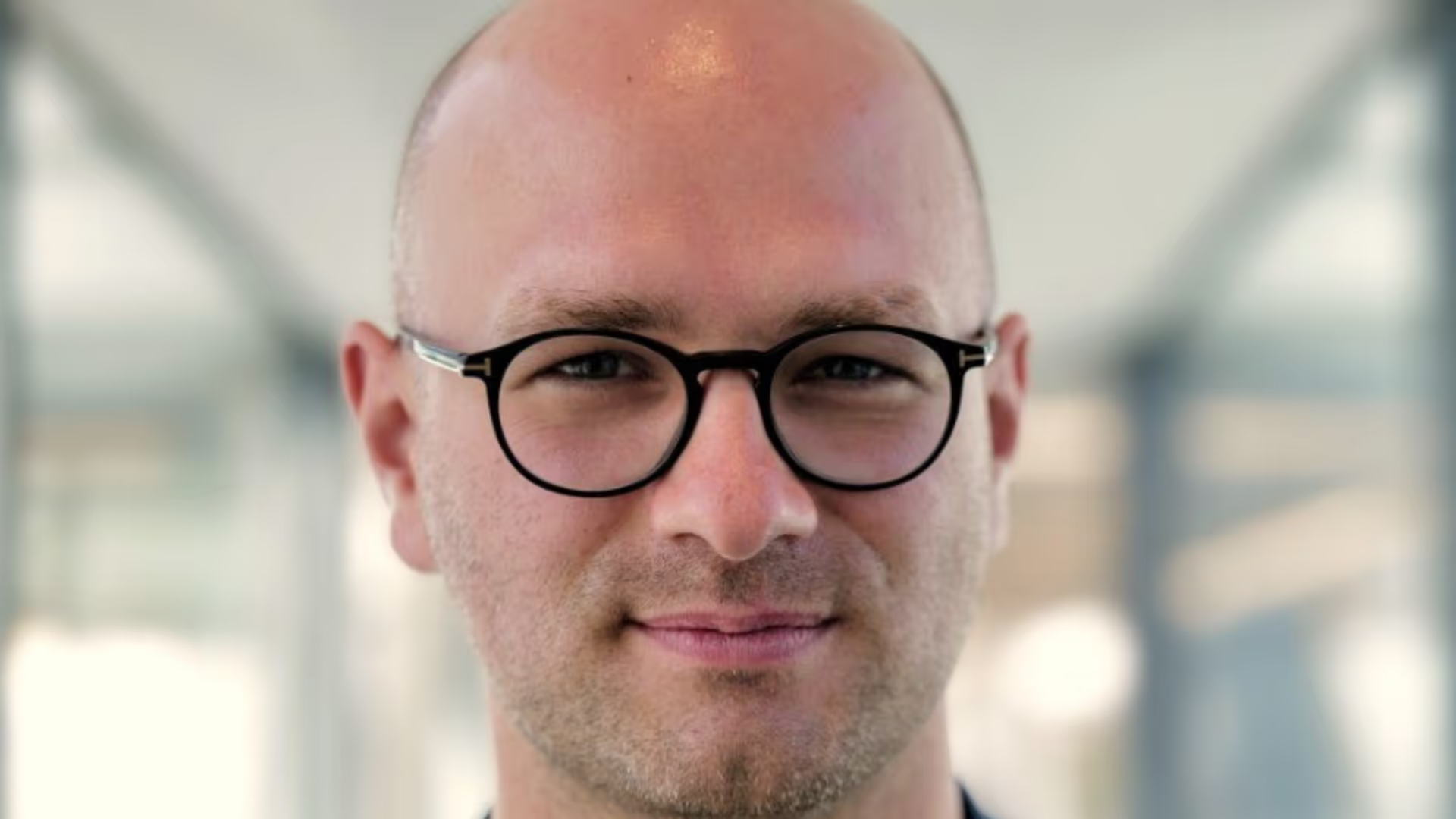
Today, we meet David Erhard, the Head of Community at Siemens based in Germany, where he guides a dynamic community strategy that spans multiple industries and innovations.
David’s journey into community work unexpectedly began through a gaming passion and has since shaped his career in profound ways. Let’s hear his story in his own words.
How It Started
I entered the community world through gaming, and in many ways, it completely changed the trajectory of my life. I was a school dropout with no clear plan, but a lifelong gamer with a deep passion for online worlds. Becoming a community manager for online games was my unexpected break: a true “dream come true” moment that opened a path I couldn’t have imagined.
In those early years, I had the chance to work at Electronic Arts on iconic franchises such as FIFA and Command & Conquer, and later on Candy Crush. These experiences taught me everything about engagement at massive scale, real-time feedback loops, player advocacy, and building trusted relationships with passionate communities.
From there, I moved through roles in digital marketing, content, and community leadership. With each chapter, the scope grew: from moderating games to designing programs, from running campaigns to shaping cross-company collaboration.
Today, I lead large-scale community strategies and ecosystem transformations, helping organizations connect customers, partners, and experts in meaningful ways. Gaming gave me my start, community gave me a career, and both continue to shape how I build and lead today.
A Day in the Life
I lead ecosystem and community strategy for Siemens Xcelerator, a global platform that connects customers, partners, and industry experts across key topics like Industrial AI, Digital Twins, Sustainability, Manufacturing, and more. It’s not a traditional “forum-style” community; it’s a large-scale ecosystem with Circles, curated events, expert networks, and content that brings people together to learn, collaborate, and solve real industry challenges.
A typical day is a mix of strategic work and hands-on building. I spend a lot of time aligning across many internal teams - product, marketing, sales, innovation, legal, and partner management to make sure community is seamlessly integrated into the broader customer and partner experience. That can mean designing new engagement formats, shaping editorial and event calendars, defining partner participation models, or mapping how community data supports demand generation.
I also work closely with external thought leaders, industry partners, and customers to curate speakers, create meaningful conversations, and build networks around high-value topics like AI, Hydrogen, or Future Foods. Some days are about storytelling and content, others about platform experience design, analytics, or internal strategy sessions.
In short: my job is to architect the spaces, programs, and relationships that help thousands of people across industries learn from each other and build what’s next together.
The Tools that Power My Work
My go-to tool for community building is Gradual. It’s the platform we use to power the Siemens Xcelerator Community and our Circles model. What I value most is its focus on curated experiences: events, learning paths, expert groups, and structured conversations all sit in one place, which aligns perfectly with our connection-driven ecosystem approach.
That said, Siemens is a big organization with a long history, so we also work with several other platforms across different business units - Salesforce communities, Higher Logic, and even custom-built tools for specialized use cases. Each serves a purpose, often for very specific audiences.
Because of that, one of my major priorities going forward is harmonization. We don’t need to force every community into one platform, but we do need a unified “One Siemens Community” experience: consistent governance, shared data flows, a common identity layer, and a clear entry point for customers and partners. The goal is to make community feel like a seamless part of the Siemens ecosystem, no matter where the interaction happens.
So while Gradual is my daily driver, the real toolset is the orchestration of platforms, choosing the right one for each need while building toward a coherent, connected community experience across Siemens.
Advice for Newcomers
My biggest advice is to follow your passion but also define your lane. Community is a broad field, and if you don’t articulate what you mean by it, others will fill in the gaps for you.
Early in your career, be intentional about the kind of community work that energizes you: social engagement, platform-based communities, product adoption, customer support, events, or ecosystem building. Each path requires different skills, and knowing your direction helps you grow with purpose.
I also wish I had understood sooner how important it is to define measurable impact. Community work can be incredibly meaningful, but it often lives in a gray zone for organizations. Find a KPI, even a soft one, that you can own. It might be engagement depth, member activation, time-to-answer, program participation, or the quality of connections. The point is to anchor your work to something you can clearly communicate.
Finally, stay curious and keep experimenting. Community is ultimately about people, and people evolve. The best community professionals are those who listen deeply, adapt quickly, and aren’t afraid to try new formats, tools, or ideas.
If you bring passion, clarity, and a willingness to learn, community work can open doors you never expected.
Resources I Suggest
One of the best resources for new community builders is actually other communities. I spend a lot of time exploring how different ecosystems are structured, how they engage their members, and what makes them thrive. Real examples are often more valuable than any textbook.
One of my favorite cases is the LEGO Ideas Community. It shows beautifully how fandom, creativity, and co-creation can lead to something tangible. Members submit concepts, the community votes, and the best ideas are turned into real LEGO sets you can buy in stores. It’s a perfect example of how community engagement can move far beyond conversation and become part of a company’s product pipeline.
So my recommendation is simple: stay curious, study great communities across industries, and let them inspire you. Sometimes the most powerful learning comes from seeing what’s already working out in the wild.
💬 Let’s connect on LinkedIn — I’d love to hear from fellow community builders.
💡 The People Behind the Programs is a blog series that shines a light on the community professionals powering impactful programs around the world. Want to share your story or nominate someone doing incredible community work? Submit your spotlight here.
Are you passionate about building communities?
Join the movement, start a CMX Connect chapter in your city or virtually and become a local leader in the global community industry. 👉 Apply to become a chapter director


.svg)


.svg)

